
What Type of Loft Conversion Is Right for Your Medway Home?
Deciding to convert your loft is the easy part. The harder question is which type of conversion suits your property, your requirements, and your budget. A Velux conversion, a rear dormer, a hip-to-gable, or a combination — each delivers a different amount of space, costs a different amount, takes a different length of time, and suits different roof shapes. Choosing the wrong type means either paying more than necessary for space you don’t use or compromising on headroom and floor area that a different approach would have provided.
This guide explains each type of loft conversion, what it costs across the Medway Towns, which properties each type suits best, and how to decide which approach is right for your home.
Velux Conversions
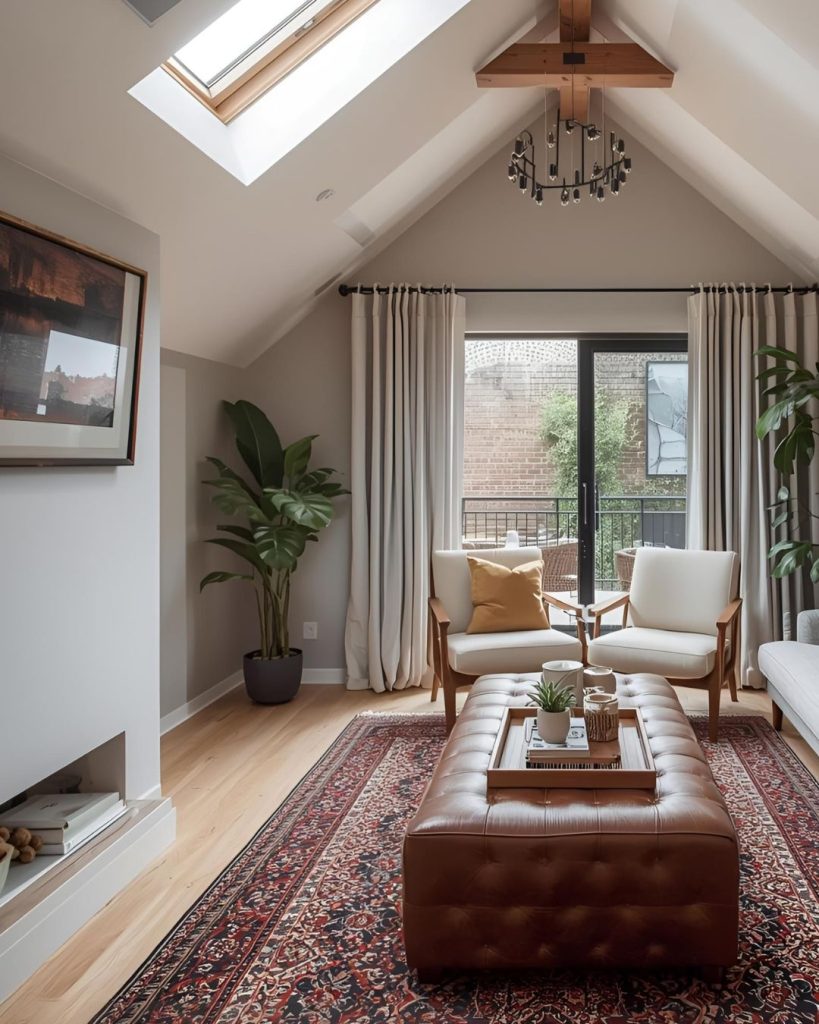
A Velux conversion is the simplest type. The existing roof structure stays exactly as it is — no dormers built, no gable walls extended, no change whatsoever to the external appearance of the property. Natural light comes from Velux roof windows installed into the existing slope, and the interior is fitted out with a strengthened floor, insulation, a new staircase, electrics, plastering, and decoration.
Because the roof shape stays unchanged, the usable floor area is determined entirely by the existing space between the rafters. Full standing height only exists near the ridge where the two slopes meet, tapering down toward the eaves on both sides. This means the centre of the room works well for furniture and standing, while the lower areas along the walls suit storage, low shelving, or a bed positioned with its head toward the eaves.
What it costs: A Velux conversion in Medway typically costs between £18,000 and £32,000 depending on the size of the room and the specification of the finishing. A straightforward bedroom conversion with roof windows and basic finishing sits at the lower end. Adding an ensuite, upgraded flooring, and higher-specification finishing pushes toward the upper end.
What it suits: Velux conversions work on properties where the existing roof has adequate headroom — roughly 2.2 metres from the top of the ceiling joists to the ridge. Many of Medway’s detached properties and larger semis across Walderslade, Lordswood, and Wigmore have sufficient height. The key advantage is cost and speed — a Velux conversion is the cheapest type and typically completes in four to six weeks because the structural work is less extensive than any other option.
The limitation: Usable floor area. The sloping ceiling on both sides restricts where you can stand upright, walk freely, and position furniture. For a bedroom this is perfectly workable — beds don’t need full ceiling height. For a home office where you’re sitting at a desk all day, it’s fine provided the desk is positioned centrally. For a room that needs to feel spacious and unrestricted, a dormer delivers a better result.
Rear Dormer Conversions
A rear dormer extends the roof outward at the back of the property, creating a box-shaped addition with a flat roof, vertical walls, and a flat ceiling. This dramatically increases both the usable floor area and the headroom compared to a Velux conversion, because instead of working within the existing slope you’re building new vertical walls that provide full standing height across the extended section.
A small dormer covering part of the rear roof slope adds headroom in the critical area where you need it most. A full-width dormer spanning the entire rear elevation transforms the loft from a converted attic into a room that genuinely feels like an additional floor — consistent headroom throughout, vertical walls for furniture placement, and enough space for a generous master bedroom with a proper ensuite bathroom.
Full-width rear dormers are the most popular loft conversion type across the Medway Towns because they deliver the best balance of cost and usable space. The room you gain is substantial, the cost premium over a Velux is moderate, and the result transforms the property’s capacity.
What it costs: A rear dormer conversion in Medway typically costs between £28,000 and £48,000. A modest dormer covering part of the roof with a simple bedroom sits at the lower end. A full-width dormer creating a spacious master suite with a well-specified ensuite bathroom reaches the upper end. Most three bedroom semis across Gillingham, Chatham, and Rainham converting with a full-width rear dormer and ensuite fall between £32,000 and £45,000.
What it suits: Almost any property with a pitched roof that faces rearward. The dormer builds out from the back of the house, so it’s largely invisible from the street — which is why most rear dormers proceed under permitted development without needing planning permission. Properties across every part of the Medway Towns suit rear dormers, from the Victorian terraces in Gillingham and Rochester through to the post-war housing in Strood and Walderslade.
Planning considerations: Most rear dormers in Medway proceed under permitted development, but conditions apply. The dormer can’t extend beyond the plane of the existing roof slope facing the highway. The total volume can’t exceed 40 cubic metres for terraced houses or 50 cubic metres for detached and semi-detached properties. Materials must match the existing roof in appearance. Properties within Rochester’s conservation areas face additional restrictions and should check with Medway Council before committing to a design.
Hip-to-Gable Conversions
Many semi-detached houses across the Medway Towns have hipped roofs — where the side of the roof slopes inward rather than meeting a flat vertical gable wall. This hip dramatically reduces the usable loft space because the sloping side eats into the floor area, restricting the room’s width at the point where you need it most.
A hip-to-gable conversion solves this by extending the side wall vertically up to the ridge line. The sloping hip is removed and replaced with a flat gable end wall, recovering the floor area that was previously lost inside the roof. The difference in usable space is significant — a hip-to-gable conversion on a typical semi-detached house in Medway recovers several square metres of floor area that the hip was consuming.
The most effective configuration is a hip-to-gable combined with a rear dormer. The gable extends the width of the room to the full property width, while the dormer extends the depth. Together they create the most spacious possible conversion from the available roof — often large enough for a generous master bedroom, a well-proportioned ensuite bathroom, and built-in storage along the remaining eaves.
What it costs: A hip-to-gable conversion on its own typically costs between £32,000 and £48,000. Combined with a full-width rear dormer — the most popular configuration — costs fall between £40,000 and £58,000. The additional structural work to rebuild the side wall and modify the roof structure adds cost compared to a dormer alone, but the space gained is substantially greater.
What it suits: Semi-detached houses with hipped roofs. This is a significant proportion of Medway’s housing stock — the inter-war semis across Chatham and Rainham, the post-war housing through Strood, Walderslade, and Lordswood, and many of the established properties across Gillingham’s residential streets all commonly feature hipped roofs. If your property is semi-detached and the side of the roof slopes inward, a hip-to-gable conversion almost certainly makes sense as part of the project.
The limitation: Hip-to-gable conversions only apply to semi-detached or detached properties with hipped roofs. Terraced houses don’t have exposed side walls to extend, and properties with existing gable ends don’t need the conversion because the vertical wall is already there.
Mansard Conversions
A mansard conversion is the most substantial and expensive type. It effectively replaces the entire rear roof slope with a near-vertical wall topped by a shallow-pitched roof, creating maximum internal headroom and floor area across the full depth of the property. Mansard conversions provide the most usable space of any conversion type, but the extensive structural work involved makes them significantly more expensive.
What it costs: A mansard conversion in Medway typically costs between £45,000 and £70,000 depending on the property size and specification. The extensive structural work, the new roof construction, and the amount of external brickwork or cladding involved drive the cost well above dormer and hip-to-gable alternatives.
What it suits: Properties where maximum space is the priority and the budget allows. Mansard conversions are most common on terraced houses where a hip-to-gable isn’t possible and a dormer alone doesn’t provide enough room, or on properties where the existing roof pitch is too shallow for a conventional dormer to deliver adequate headroom.
Planning: Mansard conversions almost always require planning permission because they significantly alter the roof profile. This adds eight to twelve weeks for the application process and introduces uncertainty about the outcome that permitted development avoids.
Which Type Is Right for Your Medway Home?
The decision depends on three factors — your roof shape, how much space you need, and your budget.
If your roof has good existing headroom and you need a modest additional room on a budget, a Velux conversion delivers a functional bedroom or office at the lowest cost and in the shortest time.
If you want a spacious room that feels like a proper additional floor, a rear dormer is the right choice for most Medway properties. It delivers the best balance of space and cost, and the full-width option creates a room that rivals the bedrooms on the floor below.
If your semi-detached home has a hipped roof, adding a hip-to-gable conversion alongside the rear dormer is almost always worth the additional cost. The extra width gained transforms the room from adequate to generous, and the combined approach delivers the most usable space your roof can provide.
If you need the absolute maximum space and budget allows, a mansard conversion provides it — but at significantly higher cost and with a planning application required.
The most reliable way to determine which type suits your property is a site visit where the builder inspects your roof space, measures the available dimensions, assesses the structural requirements, and advises which approach delivers the best result for your specific property and budget.
If you’re considering a loft conversion at your Medway home, get in touch for a free assessment. We’ll inspect your roof, discuss your options honestly, and provide a clear quote so you know exactly what each approach involves before you commit.