
How Much Does a House Extension Cost in Medway?
A house extension is one of the most significant investments a Medway homeowner can make — and one where the cost question rarely has a simple answer. Two extensions of the same floor area can cost very different amounts depending on the type of structure, the complexity of the build, the site access conditions and the specification of the finished space inside. Understanding what drives the cost of your specific project is considerably more useful than a national average figure that bears no relation to the Medway market.
Medway’s housing stock creates a varied picture for extension projects. The Victorian and Edwardian terraces of central Chatham, Rochester High Street and the older streets of Gillingham have restricted rear access, smaller garden plots and in some cases conservation area constraints that affect both the planning position and the build logistics. The inter-war semis of Rainham, Wigmore and Hempstead sit on more generous plots with better site access. The post-war estates of Lordswood, Walderslade and Parkwood have their own characteristics. And the newer housing across the Medway Waterfront and the peninsula developments brings a different planning and construction context entirely. A builder who works regularly in Medway understands all of this — and prices accordingly.
This post sets out realistic current prices for the main extension types across the Medway market, and explains what drives the final cost up or down.
What Does a House Extension Cost in Medway?
For a properly built, finished extension from a reputable Medway builder, realistic current prices are:
Single storey rear extension:
- Up to 15 sqm: £32,000–£52,000
- 15–25 sqm: £48,000–£78,000
- 25–40 sqm: £72,000–£110,000+
Double storey extension:
- Standard two-storey addition: £70,000–£125,000+
Side return extension:
- Standard side infill: £38,000–£65,000
Wrap-around extension:
- Combined rear and side: £65,000–£115,000+
These are finished, installed prices covering structural work, roofing, external walls, glazing, internal plastering, floor finishes and basic decorating. Kitchen or bathroom fitting within the new space, bespoke joinery and high-specification glazing are priced separately.
Medway sits broadly in line with the wider Kent market on construction labour — above rural Kent and below the premium commuter belt to the west, and well below London rates. For ME4, ME5, ME7 and ME8 postcodes and the surrounding area, the figures above represent realistic current pricing from an established local contractor.
The Main Extension Types
Single Storey Rear Extension
The most common extension type across Medway’s residential streets — and the most variable in what it actually involves. A straightforward single storey addition on a level plot with good access and a simple lean-to or flat roof is a very different project to one on a sloped garden in a narrow Chatham terrace with restricted vehicle access and a more complex roof junction.
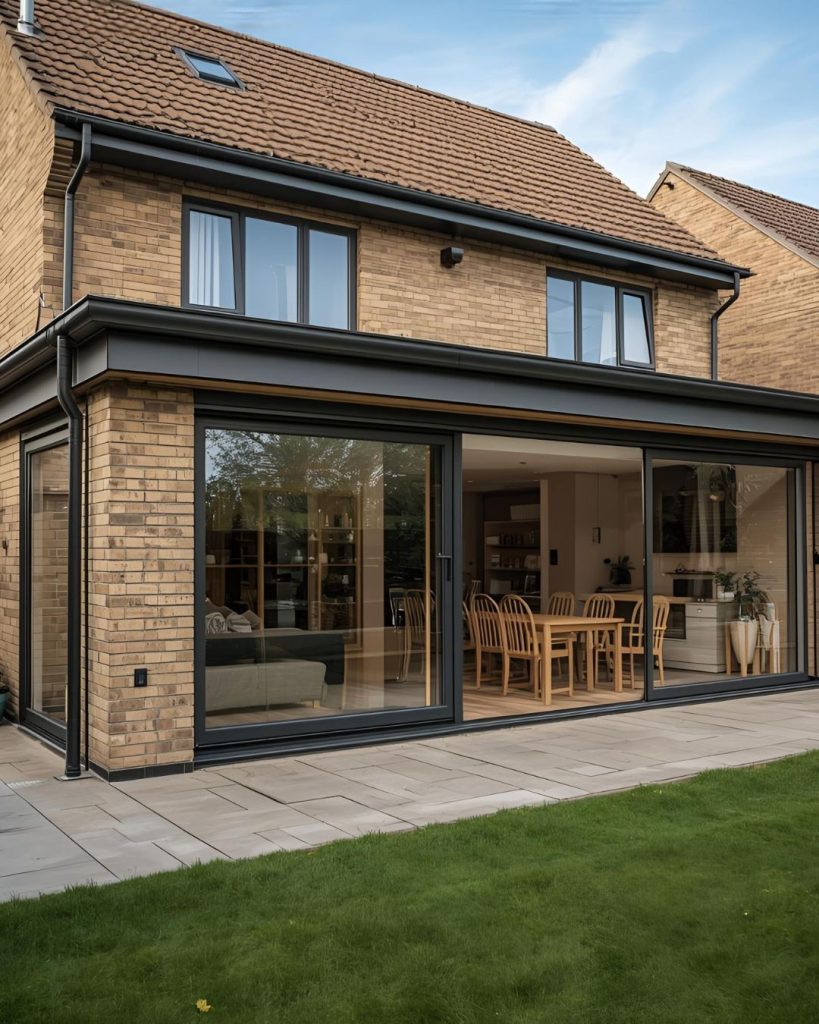
Bi-fold or sliding doors across the rear elevation are the most popular glazing choice across Medway — creating a connection to the garden and opening the room to the outside in summer. This specification adds meaningfully to the cost compared with a standard window and door arrangement. Roof lanterns and large rooflights are increasingly popular in flat-roof extensions and add both light and architectural interest, also at additional cost.
Many single storey extensions in Medway fall within permitted development — no planning application required provided size and siting criteria are met. In conservation areas — including parts of Rochester city centre, historic Chatham and the riverside areas — permitted development rights may be more restricted and a planning application is more likely to be required.
Double Storey Extension
A double storey addition increases the complexity and cost significantly — more structural work, a larger and more complex roof, more trades involved, and typically an upper floor bathroom or en-suite addition that brings plumbing scope to what would otherwise be a purely structural project.
The additional cost over a single storey of equivalent ground floor area is typically 40 to 60 percent more — but the increase in usable space is considerably greater. For families in Medway’s larger detached housing who need both ground floor living space and an extra bedroom, a double storey extension offers the best cost per square metre of any extension type.
Side Return Extension
Side return extensions fill the narrow passage alongside a property — particularly common on the Victorian and Edwardian terraces of central Gillingham, Chatham and the Rochester streets where this space is typically unused. The structural work is less extensive than a full rear extension as the existing house walls form two sides of the new space — but confined working conditions slow the build and can add to cost.
Wrap-Around Extension
A wrap-around combines a rear extension with a side return to create an L-shaped addition that substantially increases the ground floor footprint. It is the most involved single storey extension type to build — the roof junction between the rear and side elements requires careful design and detailing. The result can be transformative for the ground floor layout, particularly in Medway’s inter-war semi-detached stock where the original kitchen and dining arrangement feels restrictive by modern standards.
What Affects the Final Price?
Ground Conditions
Medway’s varied ground conditions are one of the most significant local variables in extension costs. The chalk and gravel on higher ground across Rainham, Wigmore and the North Downs ridge is generally firm and well-draining, making for straightforward foundations. The lower-lying areas closer to the Medway Estuary, the Isle of Grain and the Gillingham waterfront sit on heavier clay and estuarine soils that require more careful foundation design. Former industrial land — Chatham and parts of Gillingham have a significant legacy of dockyard and industrial use — can occasionally contain made ground that affects what type of foundation is appropriate and adds cost.
Site Access
Restricted access adds cost to almost every stage of the build. Properties in the older terraced streets of central Chatham and Gillingham where rear access is through a shared passageway or the house itself, where skips and material deliveries cannot reach the working area easily, and where scaffolding has to be managed around narrow streets — all cost more to build on than a detached house in Rainham with an open driveway and easy rear access.
Specification
The specification of glazing, doors, internal finishes and any kitchen or bathroom fitting within the new space accounts for a significant proportion of the total extension cost. An extension with standard aluminium doors and a basic plaster and paint finish costs considerably less than the same structure with a full-width bi-fold glazing system, underfloor heating, a roof lantern and a fitted kitchen. Being clear about specification from the outset and ensuring all quotes cover the same scope is the most reliable way to make quotes genuinely comparable.
Planning and Conservation Constraints
Rochester’s city centre and cathedral area, parts of historic Chatham and several village settlements across the Medway district carry conservation designations that affect what materials are acceptable on extensions and how the planning application needs to be presented. Extensions in these areas typically require more design input and a planning application even where the work might be permitted development elsewhere.
Party Wall Agreements
For semi-detached and terraced properties — which account for a large proportion of Medway’s residential stock — structural work within three to six metres of a shared boundary triggers the Party Wall etc. Act 1996. Notice must be served on the affected neighbour at least two months before work starts. Budget for a party wall surveyor’s fees if the neighbour requires a formal award — typically £800 to £1,500.
How Long Does an Extension Take in Medway?
As a guide for the main types:
- Single storey, permitted development: four to six months total including pre-build
- Single storey, planning required: six to nine months total
- Double storey, planning required: eight to twelve months total
- Wrap-around, planning required: seven to ten months total
The pre-build phase — design, planning, structural engineering and party wall — typically accounts for two to four months of the overall timeline. The on-site build for a standard single storey Medway extension runs ten to sixteen weeks depending on size and complexity.
If you are planning a house extension in Gillingham, Chatham, Rochester, Rainham, Strood or anywhere across the Medway district, we are happy to come out and take a look at your property. We will give you a clear, itemised quote based on what the project actually involves. Get in touch to arrange a visit.